
While many people associate OT with recovery from physical injuries or disabilities, the profession has deep roots in mental health, dating back to the early 20th century. At its core, OT advocated for humane, therapeutic treatment by engaging people in meaningful activities—or occupations—as a path to healing.
While sometimes overlooked, OT’s role in mental health is just as vital today as it was at the profession’s inception.


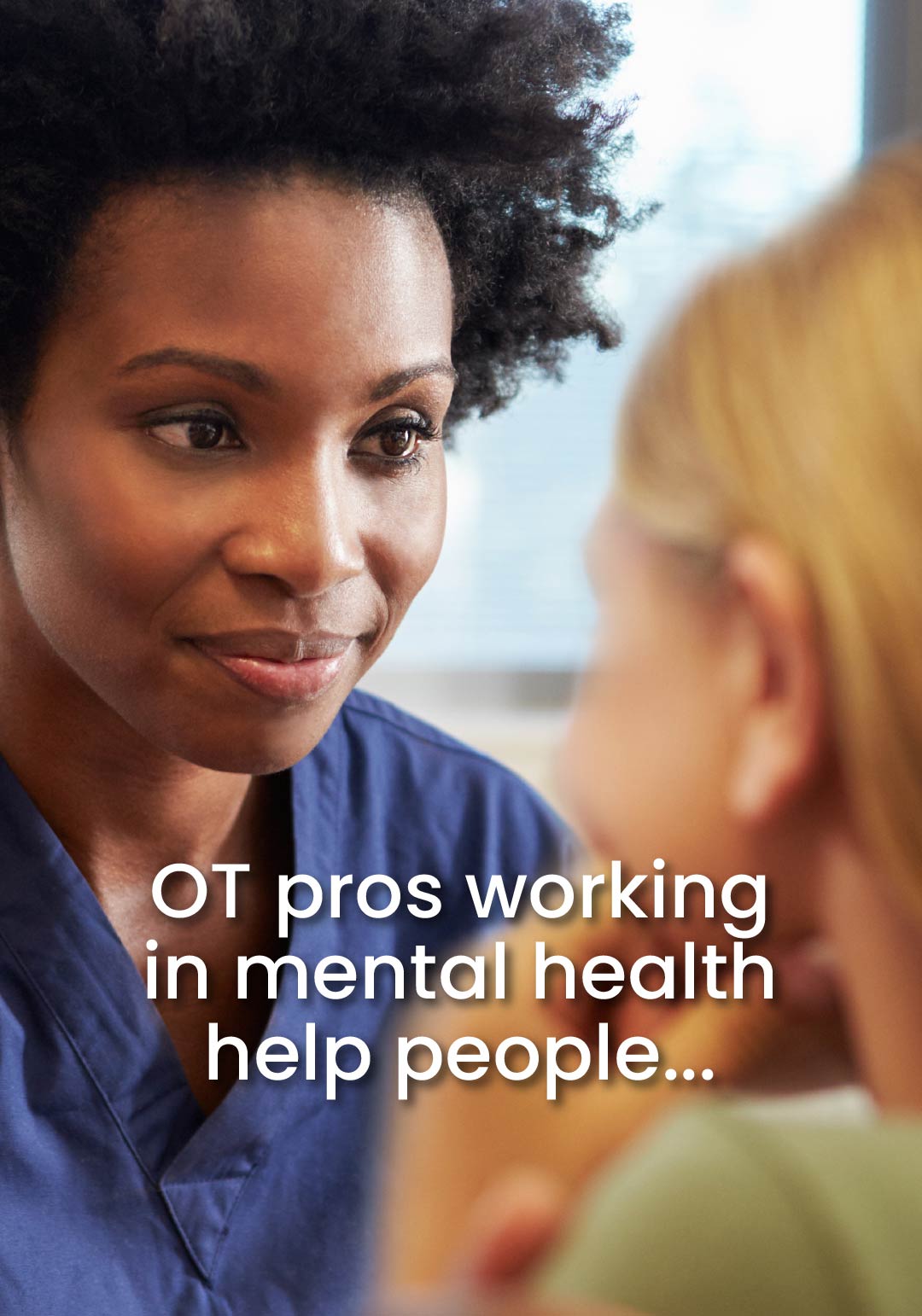

What Is Occupational Therapy’s Role in Mental Health?
Occupational therapy in mental health focuses on helping individuals engage in meaningful daily activities, routines, and roles that support their mental well-being. Whether it’s managing stress, improving social skills, establishing healthy habits, or building confidence, occupational therapy practitioners (OTPs) work alongside individuals to help them live fuller, more independent lives.

Mental health-focused OTPs help individuals across the lifespan with different needs and challenges including:
- Depression and anxiety
- Bipolar disorder
- Schizophrenia or other psychotic disorders
- Post-traumatic stress disorder (PTSD) and trauma-related disorders
- Substance use challenges
- Eating disorders
- Autism, developmental disabilities, or other diagnoses with co-occurring mental health concerns
- Seasonal affective disorder (SAD)-related depression and symptoms
How Does It Work?
Occupational therapy practitioners use a holistic approach that addresses not just symptoms, but the real-world impact of mental health conditions. Mental health OT interventions may include:
- Developing coping strategies for emotional regulation
- Building structure and routine for daily life
- Improving communication and social interaction
- Time management and executive functioning skills
- Returning to work, school, or community life
- Engaging in hobbies, leisure, and self-care activities
Intervention plans are tailored to support each person’s goals and daily participation. For example, a person struggling with anxiety might work with an OTP to gradually return to social events or learn stress-management techniques through structured activities.



Where Do Mental Health OTPs Work?
- Inpatient psychiatric hospitals (OT in psychiatry): supporting clients during acute mental health crises
- Outpatient programs: assisting with vocational planning, social skills, and independent living
- Community mental health centers: helping clients build life skills and connect to resources
- Partial hospitalization and intensive outpatient programs: providing structured day treatment
- Schools, colleges, and universities: promoting mental wellness and academic success
- Residential and group homes: supporting independent living skills
- Homeless shelters and transitional housing programs: addressing barriers to stability
- Correctional facilities and reentry programs: facilitating skill development for community reintegration
- Veterans Affairs (VA) hospitals and military facilities: helping service members and veterans with adjustment challenges during or after service
- Private practice: offering individualized psychosocial OT services
Why It Matters
Mental illness can make everyday life feel overwhelming. The routines that most people take for granted—getting out of bed, preparing meals, maintaining hygiene, holding a job—can become significant hurdles. Occupational therapy breaks those challenges down into manageable steps, helping people regain or find structure, purpose, and identity.
This is why a mental health occupational therapy practitioner plays such an important role in helping individuals rebuild independence and daily function.
A Growing Need
The demand for mental health services continues to grow. Occupational therapy is increasingly recognized as a vital part of interdisciplinary care, offering a functional, person-centered approach that promotes recovery, resilience, and independence.

Interested in Mental Health OT?
OT in mental health is not just meaningful—it’s essential. If you’re considering a career where you can make a real difference in people’s lives, occupational therapy may be the path for you.
Related Resources



Further Reading
American Occupational Therapy Association (AOTA):
- Mental Health Resources
- Occupational Therapy Practice Framework: Domain and Process (4th Edition) (Provides foundational understanding of OT practice)
- Occupational Therapy in Mental and Behavioral Health
National Institute of Mental Health (NIMH):
- Health Information (General information on mental health conditions)
World Federation of Occupational Therapists (WFOT):
